Author: Ammar Najjar
 44 posts
Blog Posts
When AI Memory Doesn't Follow You Between Tools

TL;DR AI memory helped me build on past conversations, but knowledge stayed split across tools. Using Obsidian as a shared source showed what's possible, while revealing where manual context transfer still needs work.
I use several AI tools regularly, each for a different purpose. ChatGPT helps with developing ideas, writing articles, reviewing texts, and reflecting on experiences. Claude Code supports my technical work, from investigating problems to planning implementations and reviewing architectural decisions. Local AI models handle personal material I prefer to process on my own machine.
Read more →Technical Leadership: Ownership Starts Before the Decision
 leadershipAmmar Najjar · October 14, 2026 · 4 min read
TL;DR Summaries carry decisions, not the judgment that produced them. Inviting the right people in before a decision is made turns attendance into exposure to the reasoning, and exposure into independence.
For a while, I treated information flow mainly as a communication problem. When something important happened in an architecture, operations, or cross-team discussion, I tried to make sure the relevant people heard about it afterward. I summarized decisions, shared links, and added notes where they could be found later. That helped with transparency, but I started to notice a limitation in this approach.
Read more →Keeping Knowledge Useful: What I Learned from 1,000+ Obsidian Notes
 productivityAmmar Najjar · October 11, 2026 · 8 min read
TL;DR My move from Notion to Obsidian gave me a file-based foundation. Reviewing more than 1,000 notes showed me how tags, metadata, links, and navigation need to evolve with the collection.
I recently took a closer look at my Obsidian vault, a collection that has grown steadily over time. It contained more than 1,000 notes and supporting Markdown files on books, conversations, technical knowledge, decisions, and writing. Among them, I found tags with overlapping meanings, book notes with incomplete metadata, several decisions stored together in a long file, and navigation pages containing little more than a heading.
Read more →Technical Leadership: A Good Impact Story Still Needs a Measurable Direction
 leadershipAmmar Najjar · October 9, 2026 · 4 min read
TL;DR Separate local value from expected movement. Ask what should change in the outcome you care about, and proceed with open eyes when the answer is learning or risk reduction.
In planning discussions, I have often seen proposals that sound convincing because their local impact is easy to describe. A feature may remove friction for a customer, simplify a workflow, or enable something that was previously difficult. Those are useful arguments, but they can still leave an important question unanswered: how does this work move the broader goal we are trying to achieve?
Read more →Technical Leadership: Turn Disagreement into a Testable Decision
 leadershipAmmar Najjar · October 1, 2026 · 5 min read
TL;DR Replace longer debate with a small spike: agree on the criteria first, review the evidence together, then decide.
I recently found myself in an engineering discussion that kept circling around the same disagreement. We were considering two ways of structuring part of a frontend application, and both had reasonable arguments behind them. One approach promised a cleaner separation and more consistent structure. The concern from the other side was that we would pay for that structure with additional indirection and make future changes harder to follow.
Read more →Technical Leadership: Separate the Practice from the Problem
 leadershipAmmar Najjar · September 28, 2026 · 3 min read
TL;DR Name the problem, the outcome, and the constraints first. Then the proposed practice becomes one option among several, and the team can keep the problem even if it rejects the solution.
I recently noticed how quickly an engineering discussion can become centered on a practice rather than the problem that triggered it. In one team conversation, we were discussing whether to introduce test-driven development. The discussion could easily have turned into the usual exchange of opinions about TDD, its benefits, its overhead, and whether it fits the way the team works.
Read more →Technical Leadership: Stop Acting as the Proxy
 leadershipAmmar Najjar · September 24, 2026 · 4 min read
TL;DR Help clarify the problem, then step out: connect the decision-maker with the affected person instead of carrying the decision back and forth.
One leadership pattern I have become more careful about is what happens when a problem moves beyond my decision authority. In technical and organizational work, this happens more often than it first appears. Someone raises an issue, I help clarify it, challenge some assumptions, gather context, and try to move the situation forward. At some point, however, the remaining question genuinely requires a decision I am not authorized to make.
Read more →My Local AI Setup, Six Months Later: 48 GB, Qwen3.8, and a Different Bottleneck

TL;DR Six months after the 16 GB setup: 48 GB, one default 27B model, Splash inference in LM Studio, and 64K context, because the constraint moved from fitting a model to keeping long agent sessions usable.
A few months ago, I wrote about running a useful local AI development setup on a MacBook Pro with 16 GB of unified memory. At the time, memory shaped almost every decision. I experimented with smaller models, limited context carefully, and looked for a combination that was capable enough for coding while still leaving room for my IDE, containers, browser, and the rest of my development environment.
Read more →Technical Leadership: Give Autonomy a Time Boundary
 leadershipAmmar Najjar · September 17, 2026 · 3 min read
TL;DR Autonomy works when the team owns the approach and the leader makes the outcome, the fixed constraints, and the review point explicit.
I have found that giving a team room to decide can become surprisingly vague if the expected outcome and timing are left implicit.
Read more →My Local AI Coding Toolkit: How I Keep Agents Fast and Token-Efficient

TL;DR How I optimize the environment around AI coding agents to reduce token waste and keep sessions efficient.
AI coding agents have become part of my daily workflow. I use OpenCode and Claude Code for everything from exploring unfamiliar codebases and investigating bugs to implementing changes, reviewing code, and working through architectural questions.
Read more →ngrx-graph: Static Analysis and Graph Visualization for NgRx Applications
 angularAmmar Najjar · July 31, 2026 · 13 min read
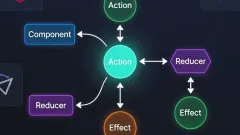
TL;DR ngrx-graph scans NgRx codebases via AST parsing, resolves aliases and nested actions, and outputs focused or project-wide action flow graphs in DOT/SVG. One command replaces hours of manual code tracing.
If you have ever traced an action through a sprawling NgRx codebase, wondering which effect listens to it, which reducer handles it, and whether some other effect silently dispatches another action in the chain, you know the pain. Manual code traversal works until it does not. One missed dispatch() call buried in a mergeMap. Your mental model breaks.
Read more →How I Configure Cloudflare for My Website
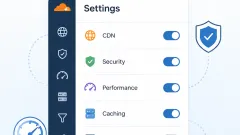
TL;DR A systematic review of every Cloudflare Free plan setting, what stays on, what gets disabled, and the principles behind each decision.
Open your Cloudflare dashboard today and you'll find dozens of features for improving performance, security, and reliability. Some are enabled by default, others are recommended, and new capabilities appear regularly as the platform evolves. With so many options available, I wanted to better understand how each setting contributed to my website.
Read more →How This Website Works: A Technical Look at the Stack

TL;DR A complete technical breakdown of how this site is built, from Bun + Astro content pipeline to Cloudflare deployment, minimal JavaScript, and performance optimizations.
In a companion article, I wrote about why I rebuilt this website with Astro and how that decision grew into a much larger project. That article was about the journey and the thinking. This one is about the outcome: how the website actually works, every layer from writing a post to it appearing in a reader's browser.
Read more →A Lunch Conversation Changed My Website

TL;DR How a casual lunch discussion led to rebuilding this site with Astro, modernizing the entire stack, and rethinking it as a personal digital workshop rather than a traditional portfolio.
Some of the most enjoyable projects I've worked on have started in surprisingly ordinary moments. A conversation introduces a new idea, someone shares an experience from their own work, or I come across a different way of approaching a familiar problem. The conversation eventually ends, everyone returns to their daily work, yet one small idea continues to occupy my thoughts. Over the following days that idea slowly grows into documentation, notes, experiments and, occasionally, an entirely new project. Looking back, I can trace many of my favorite learning experiences to moments exactly like these, and rebuilding my personal website became another one of those unexpected journeys.
Read more →Making Angular AI Work in Real Projects

TL;DR AI tools are great at generating code, but real Angular projects succeed only when you give them rich project context, architecture boundaries, and conventions.
AI can generate a component, write a test, or explain a compiler error. But in real applications, results depend more on project context than model capability. It doesn't understand your architecture, your conventions, or the boundaries you built over years.
Read more →Every Camera Tells a Story
 photographyAmmar Najjar · July 8, 2026 · 7 min read
TL;DR A personal reflection on how cameras shape our photography, creativity, and the stories we choose to tell through images.
Every now and then, I catch myself looking at new cameras. I open another review, compare another specification sheet, or watch yet another photographer explaining why this year's camera is better than last year's. It always begins with a simple curiosity, and before I realize it, hours have passed. Somewhere between comparison videos, photography forums, and used listings, I find myself imagining what it would be like to own a different camera.
Read more →Nine Years on GitHub Pages, Why I Finally Moved to Cloudflare

TL;DR Why I migrated this site from GitHub Pages to Cloudflare after nearly a decade, including the migration process, challenges, and discovered trade-offs.
For nearly nine years, my personal website lived on GitHub Pages. It was free, reliable, and required almost no maintenance, so why migrate? A recent move to Cloudflare Pages prompted this post, which covers the motivation behind the change, the migration process, the issues encountered, and the trade-offs discovered along the way.
Read more →Local AI on a MacBook Pro with 16 GB RAM: What Actually Works
TL;DR Practical guide to running local AI coding assistants on a 16GB M1 MacBook Pro, what works well, what doesn't, and the real setup trade-offs.
Running AI coding assistants locally sounds appealing: no API costs, your code stays on your machine, and you get a Claude Code-like experience for free. But getting it to actually work well on a 16 GB MacBook Pro M1 takes more trial and error than most guides admit.
Read more →Essential Development Tools: My Brewfile Setup
TL;DR My curated list of essential macOS development tools via Homebrew that significantly boost daily productivity and workflow enjoyment.
As a software engineer, our toolset shapes how we work and what we can accomplish. Over time, I've curated a collection of essential tools that boost my productivity and make development more enjoyable. Here's a breakdown of my Homebrew setup, featuring the tools I use daily.
Read more →Portfolio: a lightweight personal portfolio tracker
frontendAmmar Najjar · December 12, 2025 · 6 min readTL;DR This post explains the design and implementation of a simple browser based personal portfolio tracker built with React, TypeScript, and Vite, covering requirements, challenges, and solutions for state handling, caching, and charts.
This post explains the design and implementation of a small browser-first portfolio tracker. It focuses on requirements, the challenges encountered, and how the final solution addresses them, including code snippets that illustrate the state handling, caching, and chart interaction.
Read more →Mastering Git Commands: A Practical Guide
devopsAmmar Najjar · July 8, 2025 · 13 min readTL;DR A practical selection of essential Git commands that help developers track changes more effectively, collaborate smoothly, and manage project history with confidence.
Git is an indispensable tool for version control, enabling developers to track changes, collaborate effectively, and manage project history. While its capabilities are vast, a solid understanding of key commands can significantly streamline your workflow. This article delves into a selection of practical Git commands, explaining what they do, how to use them, and when they are most effective.
Read more →Angular - Content Projection
angularAmmar Najjar · June 20, 2021 · 4 min readTL;DR Content projection in Angular enables flexible and reusable components by allowing you to insert content from parent components into child components.
Content projection is a feature in angular that supports inserting a component in another component. This changes the way an angular developer designs his application/library by implementing flexible and reusable components, a boundary I revisit when making Angular AI work in real projects.
Read more →Reactjs: Arrays in jsx
frontendAmmar Najjar · November 24, 2019 · 1 min readTL;DR Quick tip on using JavaScript array map to render dynamic lists of elements in JSX instead of hard coding repeated components for cleaner and more maintainable React code as shown in the Tic Tac Toe board example.
When I tried out Reactjs tutorial few months ago, I noticed that in the official starter code, they repeated same div elements in the render() method, just in case of change in the source, I will list it here:
Read more →Fetch using Gitlab API
TL;DR Python script that uses the GitLab API with a private token to automatically clone or fetch all your accessible repositories handling configuration via JSON and providing both argparse and config file versions for convenience.
Between gitlab repos that need daily tracking and frequent machine changes, the manual cloning and sync process became exhausting. An automation script was the obvious next step to offload the boring tasks.
Read more →PyConDe & PyData 2019
pythonAmmar Najjar · January 1, 2019 · 6 min readTL;DR Personal diary style recap of attending PyConDE and PyData 2019 in Berlin covering keynotes talks tutorials sprint days and personal highlights such as meeting core developers and contributing to Bokeh.
Fresh back from PyConDe & PyData-2019, this post shares and documents the experience. Think of it as a diary more than a blog, covering:
Read more →RxJS Series - Observables
angularAmmar Najjar · January 1, 2019 · 6 min readTL;DR Introduction to RxJS Observables covering the core concepts of Observer Subscriber and how to create them from scratch or using handy static methods like of range interval timer from fromEvent and create with practical code examples.
RxJS (on Github) is a reactive programming library for Javascript, and in this series, I would like to expose my way of learning it with you.
Read more →Custom Selenium Webdrivers using Decorators
pythonAmmar Najjar · April 9, 2017 · 4 min readTL;DR Learn how to dynamically create custom Selenium WebDriver classes for different browser versions using Python decorators and class factories so you can easily run tests with multiple Firefox and Chrome binaries in parallel.
How to create custom selenium webdriver classes dynamically with a parametrized browser binary path?
Read more →Fedora23 Upgrade (unlabeled home)
devopsAmmar Najjar · July 3, 2016 · 1 min readTL;DR Quick fix for the SELinux labeling issue that occurs after upgrading to Fedora 23 or 24 where the home directory becomes unlabeled preventing user login simply run sudo restorecon -R /home to restore correct permissions.
When I tried to update from the fedora23 to fedora24, I faced the issue that the home directoy lost its labeling:
Read more →Build Vim from Source
vimAmmar Najjar · June 23, 2016 · 1 min readTL;DR Step by step guide and bash script to build the latest Vim from source on Fedora with huge features enabled including Python3 Ruby Lua Perl support and GUI for full functionality.
Many times when I want to use vim which comes within the main repo of any Linux distro, I find that it is missing some kind of support, either python or client-server mode, or any other feature. And there for I have to build it manually from source and install it. I documented the resulting setup piece by piece in my vimrc adventure.
Read more →Lwa4p Robot Arm Setup
roboticsAmmar Najjar · June 22, 2016 · 5 min readTL;DR Step by step guide with a bash script for setting up the Schunk LWA4P robot arm on ROS Indigo using an ESD CAN card including CAN interface configuration MoveIt integration and troubleshooting tips to get the arm initialized and moving.
Experiments with the powerball lightweight lwa4p robot arm from Schunk came with many difficulties getting it to move using moveit. This post shares that experience.
Read more →Adventure through my vimrc (nvimrc)
vimAmmar Najjar · June 19, 2016 · 9 min readTL;DR A detailed walkthrough of useful configurations mappings and customizations in the authors vimrc init.vim file covering general settings plugins status line and productivity enhancing tricks for Vim and Neovim.
In this post I'm going to take you in an adventure in my previously vimrc and currently init.vim which I collected from using vim then neovim along the last few years. I will explain the feature or the function, then include the configurations or code that should be inserted in the vimrc (init.vim) file to activate that feature.
Read more →Opencv on Openshift
TL;DR This post provides a bash script and step by step instructions to successfully install OpenCV in a Python 2.7 cartridge on OpenShift Online while working around the strict 1GB quota limitation.
When I wanted to intall opencv on my python-2.7 openshift online cartridge I faced the problem of quota limitation to 1GB.
Read more →
Reading Notes
Don’t Wait, Lead Now

TL;DR Jim Lord uses stories from his career to explore initiative, developing people, and accountability. The ideas I find most useful are taking responsibility where I can help, creating room for others to grow, and staying engaged after handing over a decision.
Jim Lord’s Don’t Wait, Lead Now argues that leadership can begin before someone has a formal title or an ideal opportunity. Drawing on more than thirty years in management and executive roles, Lord tells stories about people who influenced his career, decisions that tested his judgment, and small actions that had a lasting effect.
Read more →The Toyota Way
 productivityAmmar Najjar · August 27, 2026 · 10 min read
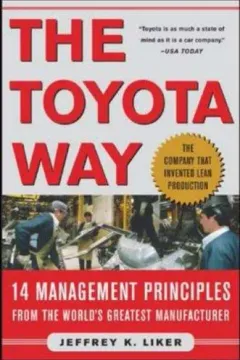
TL;DR Toyota's success rests on a management philosophy of making problems visible, building quality into the process, developing people, and improving continuously from a stable baseline.
For an engineer, The Toyota Way (Jeffrey K. Liker, 2004) reads less
Read more →Rich Dad Poor Dad
 self-improvementAmmar Najjar · August 20, 2026 · 16 min read
TL;DR The rich don't work for money; they make money work for them. Wealth comes from financial literacy and acquiring assets, not from earning a bigger paycheck.
Rich Dad Poor Dad by Robert T. Kiyosaki and Sharon L. Lechter is one of the best-selling personal finance books ever written, translated into 51 languages and part of a series that has sold more than 30 million copies worldwide. The book tells the story of two father figures in Kiyosaki's life: his own highly educated but financially struggling real father, and his best friend Mike's uneducated but wealthy father, who became his surrogate financial mentor and died as one of the richest men in Hawaii. From these two contrasting examples, Kiyosaki builds six lessons about money, assets, and the mindset that separates the wealthy from everyone else.
Read more →Create Space
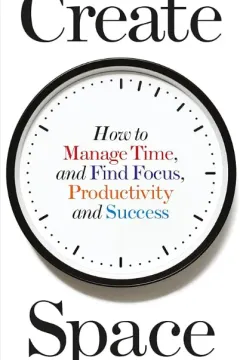
TL;DR Creating space, not filling it, is a first in human history and a prerequisite for growth. Guard solitary time for reflection, connect with your emotions and people, plan before you act, and keep space for purpose.
Derek Draper spent more than a decade coaching people at the very top of business, the FTSE 100 crowd, and Create Space (2018) distills all of that into one argument: the modern challenge isn't to fill space, it's to create it. For most of human history we've been exploring, expanding and filling the world around us. Now, for the first time, we're overcrowded and overscheduled, and growth, improvement and development all depend on making room. Draper organizes the book around four domains, thinking, connecting, doing and being, and fills each one with tools from his real coaching cases, from structured reflection to a weekly meeting with yourself.
Read more →How Google Works

TL;DR Hire smart creatives who are smarter than you, organize around passion-driven impact instead of hierarchy, surface information instead of hiding it, and let failure be a badge of honor. That culture, not the business plan, is what compounds.
Google was founded in 1998 by two Stanford PhD students, Larry Page and Sergey Brin, with no formal business experience and no MBA playbook to follow. This book is the inside account of what happened next, written by Eric Schmidt, Google's CEO from 2001 to 2011, and Jonathan Rosenberg, its longtime head of products. Their argument is blunt: the old command-and-control management model cannot survive the speed of modern innovation. The only sustainable path is to build a company around "smart creatives", obsessive hiring, and a culture that treats engineers as the core of every decision. If you have ever wondered why Google works the way it does, this is the explanation from the people who made it.
Read more →Thinking, Fast and Slow
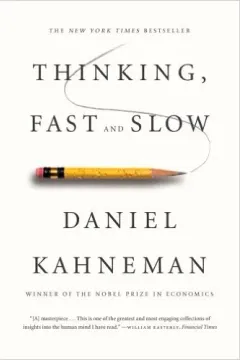 self-improvementAmmar Najjar · August 8, 2026 · 14 min read
TL;DR The mind runs on two systems: fast, automatic System 1 and slow, deliberate System 2. System 1's shortcuts make our judgment predictably biased; recognizing them is the first step to thinking better.
Daniel Kahneman, the psychologist who won the Nobel Prize in Economic Sciences in 2002, spent a lifetime of research, much of it with his longtime collaborator Amos Tversky, studying how the human mind makes decisions. Thinking, Fast and Slow distills that research into a tour of our cognitive machinery and gives us a language to talk about why so much of our reasoning is quietly driven by bias. The central claim: human judgment is predictably imperfect, and once you understand the shortcuts your mind is taking, you can start catching them.
Read more →The Five Dysfunctions of a Team
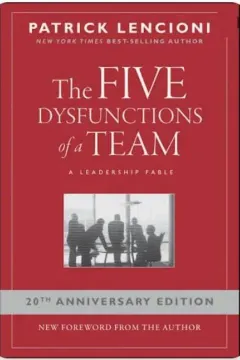
TL;DR Teams fail through five interlocking dysfunctions: absence of trust, fear of conflict, lack of commitment, avoidance of accountability, and inattention to results. Fix them bottom-up, starting with vulnerability-based trust.
Patrick Lencioni, the American business consultant and founder of the Table Group, wrote The Five Dysfunctions of a Team as a leadership fable: a short novel that diagnoses why highly qualified groups so often underperform, told through the story of a struggling Silicon Valley startup and its new CEO. The book identifies five interlocking dysfunctions, absent trust, fear of conflict, lack of commitment, avoidance of accountability, and inattention to results, and argues that each one flows from the one beneath it.
Read more →Atomic Habits
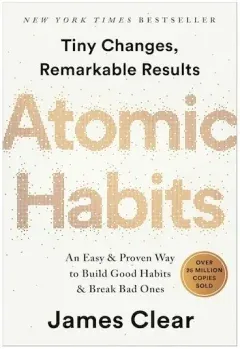 productivityAmmar Najjar · June 24, 2025 · 9 min read
TL;DR Small, consistent habits compound into remarkable results. Focus on systems over goals, and identity-based change over outcome-based change.
In his book "Atomic Habits", James Clear outlines the principles of habit formation and behavior change. The author shares his personal journey of recovery from a severe injury, which led him to understand that significant progress stems from a series of small, consistent actions, rather than singular transformative events. Clear introduces the "Four Laws of Behavior Change": making habits obvious, attractive, easy, and satisfying. He emphasizes the importance of systems over goals, highlighting how environmental design, social influence, and the immediate gratification of rewards play crucial roles in establishing and maintaining habits, ultimately arguing that true identity change is the North Star of habit transformation.
Read more →The Pragmatic Programmer, 20th Anniversary Edition
 software-engineeringAmmar Najjar · September 23, 2019 · 2 min read
TL;DR Timeless software craftsmanship principles: broken windows, DRY, tracer bullets, and decoupling. A must-read for every developer's career.
- Author: David Thomas, Andrew Hunt
Read more →Book Review: Introduction to Python for Science and Engineering
software-engineeringAmmar Najjar · September 10, 2019 · 1 min readTL;DR A concise, practical introduction to Python for scientists and engineers covering NumPy, SciPy, Matplotlib, and Pandas with hands-on Jupyter examples.
- Author: David J. Pine
Read more →Book Review: Python Descriptors
software-engineeringAmmar Najjar · September 2, 2019 · 1 min readTL;DR Explains Python's descriptor protocol with practical examples. Two parts: understanding built-in descriptors (property, classmethod, staticmethod) and building custom ones.
- Author: Jacob Zimmerman
Read more →Book Review: Python Tricks, The Book
software-engineeringAmmar Najjar · August 31, 2019 · 1 min readTL;DR A practical guide to writing more Pythonic code covering assert patterns, dunder methods, *args/**kwargs, data structures, and loop idioms.
- Author: Dan Bader
Read more →