Every Camera Tells a Story
 Ammar Najjar · Posted on July 8, 2026 · 7 min readphotography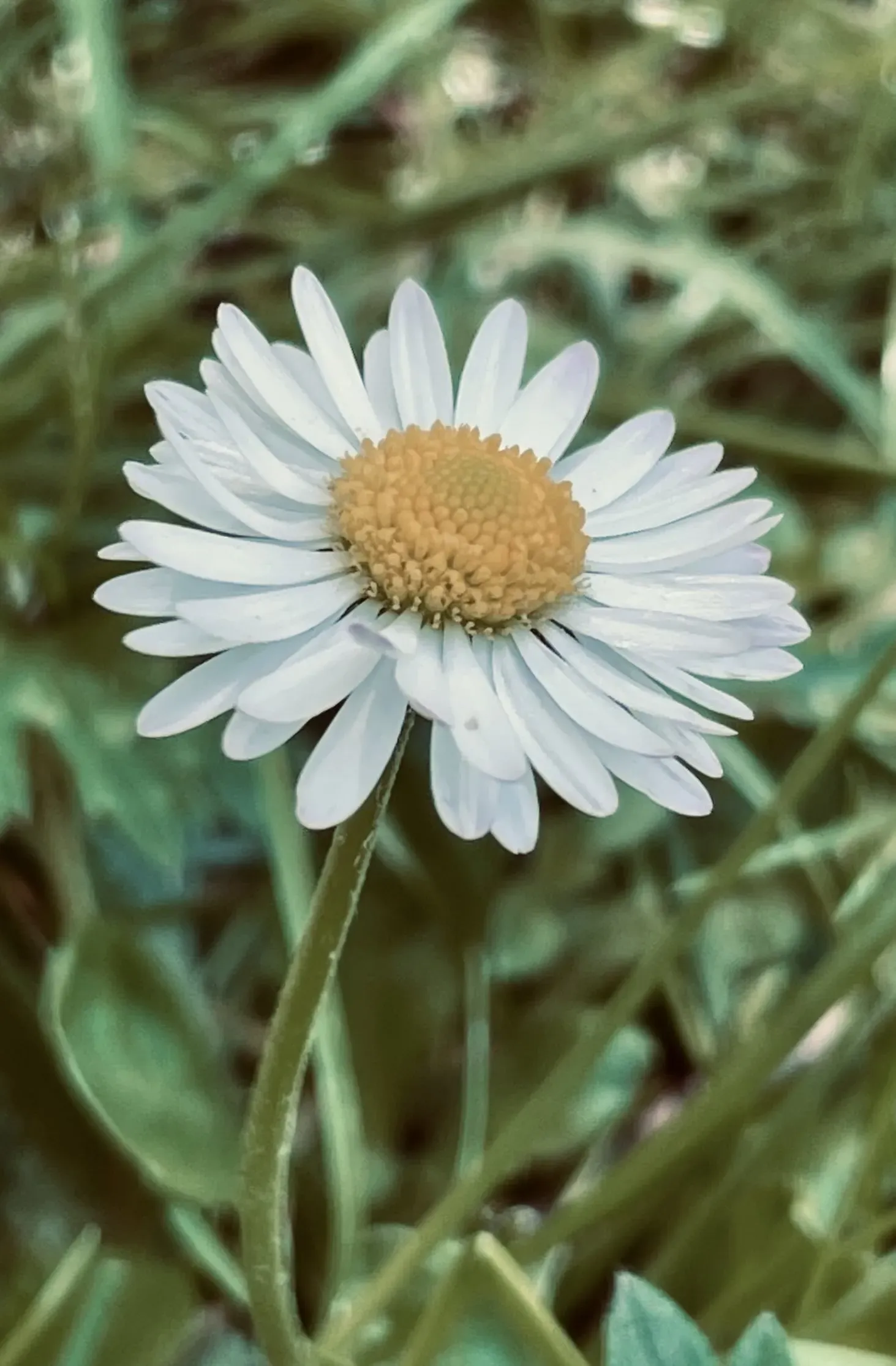
Every now and then, I catch myself looking at new cameras. I open another review, compare another specification sheet, or watch yet another photographer explaining why this year’s camera is better than last year’s. It always begins with a simple curiosity, and before I realize it, hours have passed. Somewhere between comparison videos, photography forums, and used listings, I find myself imagining what it would be like to own a different camera.
A while ago, during one of those evenings, I paused and asked myself a question that completely changed the direction of my thoughts.
What am I really searching for?
That question took me much further back than I expected.
It brought me back to my childhood, long before I owned my first digital camera.
Some of my earliest memories of photography are connected to my parents’ old analog cameras. As a child, they fascinated me. They felt mechanical and precise, and every button, dial, and lever seemed to have a purpose. There was something magical about the idea that every frame mattered and that the final photograph remained a mystery until the film was developed.
One memory has stayed with me for decades.
I remember taking one of those cameras to a small local photography shop and asking the owner if he could explain how to use it. He patiently showed me how the camera worked, and I became completely absorbed by the manual focusing mechanism. In the center of the viewfinder was a small circular focusing aid. As I rotated the focusing ring on the lens, the image inside that circle slowly shifted until both halves aligned perfectly. That tiny moment of alignment was the camera’s way of telling me the subject would be in focus.
I must have turned that focusing ring back and forth dozens of times.
The photograph itself almost became secondary. I simply wanted to understand how everything worked.
Looking back today, I realize that curiosity became the foundation of my relationship with photography.
Years later, when I finally bought my own DSLR, a Nikon D3400, that same curiosity returned with even greater intensity.
Owning my own camera felt like opening a new chapter. Every weekend became an opportunity to learn something new. I spent countless evenings reading articles, watching interviews with photographers, following tutorials, and trying to understand why certain photographs immediately captured my attention while others quietly disappeared from memory.
Little by little, photography transformed from taking pictures into learning how images are created.
I became fascinated by light. I started noticing how the same place looked completely different early in the morning than it did just before sunset. Reflections in windows suddenly became part of a composition instead of something to avoid. Shadows became tools for creating depth and atmosphere. Clouds stopped being weather and became giant softboxes changing the mood of an entire landscape.
Then came the technical side.
I wanted to understand why opening the aperture transformed the background into a soft blur that guided the viewer’s attention. I experimented with shutter speed to freeze movement or allow motion to flow through an image. I learned how focal length changed the relationship between a subject and its surroundings, and how simply taking two steps to the left or lowering the camera by a few centimeters could completely change a composition.
Every answer seemed to unlock another question, and I loved that process.
Whenever I had a free afternoon, I would take my camera and simply go for a walk. Sometimes I headed towards a nearby park, other times through the city streets, and occasionally I wandered without any destination at all. A flower growing beside the path, the texture of an old wooden door, sunlight passing through leaves, raindrops resting on a branch, reflections after a summer shower, or an interesting cloud formation above the horizon could each become the reason to stop for a few minutes.
Those walks became one of my favorite parts of photography.
They encouraged me to slow down and pay attention. Places I had passed hundreds of times suddenly revealed details I had never noticed before. Photography quietly changed the way I experienced the world. It taught me that extraordinary photographs often begin with ordinary moments observed carefully.
As my experience grew, so did my equipment, and eventually I moved to a Canon 5D Mark III.
I still remember picking it up for the first time. It felt reassuringly solid. The grip fitted naturally into my hand, the controls felt exactly where I expected them to be, and the shutter had a sound that somehow inspired confidence. Over time, that camera became more than a piece of equipment. It became a familiar companion that joined me on walks, holidays, family gatherings, and countless everyday moments.
Years passed almost unnoticed.
Photography quietly found its place in my life.
Life itself evolved as well.
Work became busier. Travel became different. Family moments became more meaningful. Photography slowly shifted from being the purpose of an afternoon to becoming part of the moments I was already living.
Around the same time, another change was happening.
Without consciously looking for it, my YouTube recommendations slowly filled with camera announcements, comparison videos, and discussions about mirrorless systems. Friends talked about eye autofocus. Reviewers praised smaller bodies. Forums debated lenses, sensors, stabilization, and future-proof systems. Every week seemed to introduce another camera promising to redefine photography.
Curiosity returned once again.
I started reading.
One article became another.
One review became three.
Canon led me to Sony. Sony led me to Fujifilm. Fujifilm led me to Nikon. Nikon led me to Leica.
Before long, I knew far more about cameras than I had only a few weeks earlier.
One evening, after closing another review, I realized something that made me smile.
I couldn’t remember the last time I had gone out with my camera simply to enjoy taking photographs.
Somehow, my photography hobby had quietly transformed into camera research.
That realization stayed with me for several days because it revealed something much more interesting than the answer to any buying guide.
My research was never really about finding the perfect camera.
It was about understanding where photography fits into my life today.
The more I reflected on that thought, the more everything started making sense.
As a child, photography represented curiosity.
With my Nikon D3400, it became learning.
With the Canon 5D Mark III, it became confidence.
Today, photography represents something different again. It has become a way to preserve family moments, document travels, slow down during a walk, and appreciate everyday scenes that would otherwise pass unnoticed.
That also explains why my expectations of a camera have changed.
The camera that fits my life today is not necessarily the camera I would have chosen ten years ago, because I am no longer the same photographer.
Perhaps none of us are.
Every stage of life shapes the way we see, the stories we want to tell, and the moments we choose to preserve. Our cameras simply accompany us through those chapters.
Looking back, I am grateful for every stage of this journey.
The old analog camera reminds me of wonder.
The Nikon D3400 reminds me of discovery.
The Canon 5D Mark III reminds me of confidence.
Whatever comes next will remind me of this chapter.
The chapter where I paused long enough to realize that choosing a camera is rarely just about choosing a camera.
It is about understanding the photographer we are becoming.
If you’ve ever found yourself watching camera reviews late into the evening, comparing systems, imagining your next lens, or wondering whether a new camera would change your photography, I’d love to hear your story.
What was the camera that marked a turning point in your own journey, and what did it teach you beyond photography?