self-improvement
Notes on building better habits, focus, and a more deliberate approach to work and growth.
3 articles
Rich Dad Poor Dad
 self-improvement
 Ammar Najjar · August 20, 2026 · 16 min read
TL;DR The rich don't work for money; they make money work for them. Wealth comes from financial literacy and acquiring assets, not from earning a bigger paycheck.
Rich Dad Poor Dad by Robert T. Kiyosaki and Sharon L. Lechter is one of the best-selling personal finance books ever written, translated into 51 languages and part of a series that has sold more than 30 million copies worldwide. The book tells the story of two father figures in Kiyosaki's life: his own highly educated but financially struggling real father, and his best friend Mike's uneducated but wealthy father, who became his surrogate financial mentor and died as one of the richest men in Hawaii. From these two contrasting examples, Kiyosaki builds six lessons about money, assets, and the mindset that separates the wealthy from everyone else.
Read more →Create Space
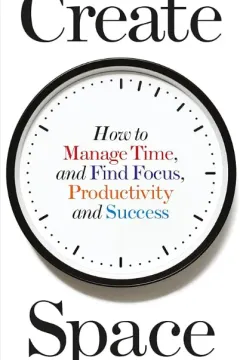
TL;DR Creating space, not filling it, is a first in human history and a prerequisite for growth. Guard solitary time for reflection, connect with your emotions and people, plan before you act, and keep space for purpose.
Derek Draper spent more than a decade coaching people at the very top of business, the FTSE 100 crowd, and Create Space (2018) distills all of that into one argument: the modern challenge isn't to fill space, it's to create it. For most of human history we've been exploring, expanding and filling the world around us. Now, for the first time, we're overcrowded and overscheduled, and growth, improvement and development all depend on making room. Draper organizes the book around four domains, thinking, connecting, doing and being, and fills each one with tools from his real coaching cases, from structured reflection to a weekly meeting with yourself.
Read more →Thinking, Fast and Slow
 self-improvementAmmar Najjar · August 8, 2026 · 14 min read
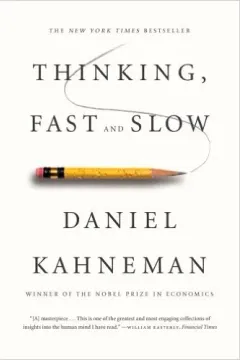
TL;DR The mind runs on two systems: fast, automatic System 1 and slow, deliberate System 2. System 1's shortcuts make our judgment predictably biased; recognizing them is the first step to thinking better.
Daniel Kahneman, the psychologist who won the Nobel Prize in Economic Sciences in 2002, spent a lifetime of research, much of it with his longtime collaborator Amos Tversky, studying how the human mind makes decisions. Thinking, Fast and Slow distills that research into a tour of our cognitive machinery and gives us a language to talk about why so much of our reasoning is quietly driven by bias. The central claim: human judgment is predictably imperfect, and once you understand the shortcuts your mind is taking, you can start catching them.
Read more →