leadership
Notes on leading engineering teams: autonomy, ownership, accountability, and enabling others to make good decisions.
3 articles
Create Space
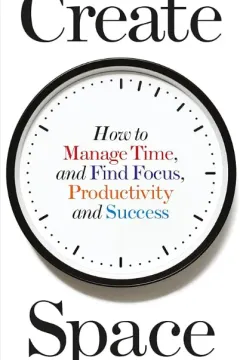
TL;DR Creating space, not filling it, is a first in human history and a prerequisite for growth. Guard solitary time for reflection, connect with your emotions and people, plan before you act, and keep space for purpose.
Derek Draper spent more than a decade coaching people at the very top of business, the FTSE 100 crowd, and Create Space (2018) distills all of that into one argument: the modern challenge isn't to fill space, it's to create it. For most of human history we've been exploring, expanding and filling the world around us. Now, for the first time, we're overcrowded and overscheduled, and growth, improvement and development all depend on making room. Draper organizes the book around four domains, thinking, connecting, doing and being, and fills each one with tools from his real coaching cases, from structured reflection to a weekly meeting with yourself.
Read more →How Google Works

TL;DR Hire smart creatives who are smarter than you, organize around passion-driven impact instead of hierarchy, surface information instead of hiding it, and let failure be a badge of honor. That culture, not the business plan, is what compounds.
Google was founded in 1998 by two Stanford PhD students, Larry Page and Sergey Brin, with no formal business experience and no MBA playbook to follow. This book is the inside account of what happened next, written by Eric Schmidt, Google's CEO from 2001 to 2011, and Jonathan Rosenberg, its longtime head of products. Their argument is blunt: the old command-and-control management model cannot survive the speed of modern innovation. The only sustainable path is to build a company around "smart creatives", obsessive hiring, and a culture that treats engineers as the core of every decision. If you have ever wondered why Google works the way it does, this is the explanation from the people who made it.
Read more →The Five Dysfunctions of a Team
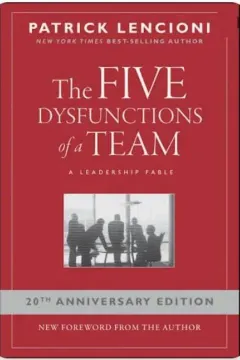
TL;DR Teams fail through five interlocking dysfunctions: absence of trust, fear of conflict, lack of commitment, avoidance of accountability, and inattention to results. Fix them bottom-up, starting with vulnerability-based trust.
Patrick Lencioni, the American business consultant and founder of the Table Group, wrote The Five Dysfunctions of a Team as a leadership fable: a short novel that diagnoses why highly qualified groups so often underperform, told through the story of a struggling Silicon Valley startup and its new CEO. The book identifies five interlocking dysfunctions, absent trust, fear of conflict, lack of commitment, avoidance of accountability, and inattention to results, and argues that each one flows from the one beneath it.
Read more →
 Ammar Najjar