Reading Notes
The Toyota Way
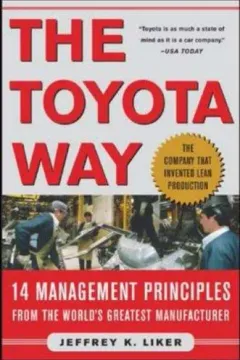
 Ammar Najjar · August 27, 2026 · 10 min read
TL;DR Toyota's success rests on a management philosophy of making problems visible, building quality into the process, developing people, and improving continuously from a stable baseline.
For an engineer, The Toyota Way (Jeffrey K. Liker, 2004) reads less
Read more →Rich Dad Poor Dad
 Ammar Najjar · August 20, 2026 · 16 min read
TL;DR The rich don't work for money; they make money work for them. Wealth comes from financial literacy and acquiring assets, not from earning a bigger paycheck.
Rich Dad Poor Dad by Robert T. Kiyosaki and Sharon L. Lechter is one of the best-selling personal finance books ever written, translated into 51 languages and part of a series that has sold more than 30 million copies worldwide. The book tells the story of two father figures in Kiyosaki's life: his own highly educated but financially struggling real father, and his best friend Mike's uneducated but wealthy father, who became his surrogate financial mentor and died as one of the richest men in Hawaii. From these two contrasting examples, Kiyosaki builds six lessons about money, assets, and the mindset that separates the wealthy from everyone else.
Read more →Create Space
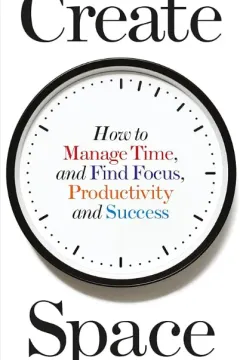 Ammar Najjar · August 14, 2026 · 18 min read
TL;DR Creating space, not filling it, is a first in human history and a prerequisite for growth. Guard solitary time for reflection, connect with your emotions and people, plan before you act, and keep space for purpose.
Derek Draper spent more than a decade coaching people at the very top of business, the FTSE 100 crowd, and Create Space (2018) distills all of that into one argument: the modern challenge isn't to fill space, it's to create it. For most of human history we've been exploring, expanding and filling the world around us. Now, for the first time, we're overcrowded and overscheduled, and growth, improvement and development all depend on making room. Draper organizes the book around four domains, thinking, connecting, doing and being, and fills each one with tools from his real coaching cases, from structured reflection to a weekly meeting with yourself.
Read more →How Google Works
 Ammar Najjar · August 10, 2026 · 11 min read
TL;DR Hire smart creatives who are smarter than you, organize around passion-driven impact instead of hierarchy, surface information instead of hiding it, and let failure be a badge of honor. That culture, not the business plan, is what compounds.
Google was founded in 1998 by two Stanford PhD students, Larry Page and Sergey Brin, with no formal business experience and no MBA playbook to follow. This book is the inside account of what happened next, written by Eric Schmidt, Google's CEO from 2001 to 2011, and Jonathan Rosenberg, its longtime head of products. Their argument is blunt: the old command-and-control management model cannot survive the speed of modern innovation. The only sustainable path is to build a company around "smart creatives", obsessive hiring, and a culture that treats engineers as the core of every decision. If you have ever wondered why Google works the way it does, this is the explanation from the people who made it.
Read more →Thinking, Fast and Slow
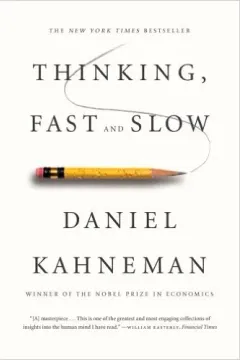 Ammar Najjar · August 8, 2026 · 14 min read
TL;DR The mind runs on two systems: fast, automatic System 1 and slow, deliberate System 2. System 1's shortcuts make our judgment predictably biased; recognizing them is the first step to thinking better.
Daniel Kahneman, the psychologist who won the Nobel Prize in Economic Sciences in 2002, spent a lifetime of research, much of it with his longtime collaborator Amos Tversky, studying how the human mind makes decisions. Thinking, Fast and Slow distills that research into a tour of our cognitive machinery and gives us a language to talk about why so much of our reasoning is quietly driven by bias. The central claim: human judgment is predictably imperfect, and once you understand the shortcuts your mind is taking, you can start catching them.
Read more →The Five Dysfunctions of a Team
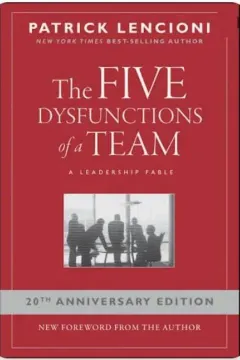 Ammar Najjar · August 2, 2026 · 9 min read
TL;DR Teams fail through five interlocking dysfunctions: absence of trust, fear of conflict, lack of commitment, avoidance of accountability, and inattention to results. Fix them bottom-up, starting with vulnerability-based trust.
Patrick Lencioni, the American business consultant and founder of the Table Group, wrote The Five Dysfunctions of a Team as a leadership fable: a short novel that diagnoses why highly qualified groups so often underperform, told through the story of a struggling Silicon Valley startup and its new CEO. The book identifies five interlocking dysfunctions, absent trust, fear of conflict, lack of commitment, avoidance of accountability, and inattention to results, and argues that each one flows from the one beneath it.
Read more →Atomic Habits
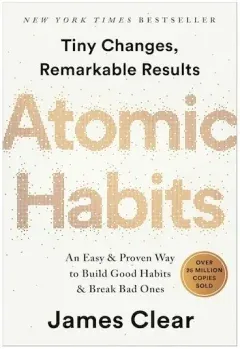 Ammar Najjar · June 24, 2025 · 9 min read
TL;DR Small, consistent habits compound into remarkable results. Focus on systems over goals, and identity-based change over outcome-based change.
In his book "Atomic Habits", James Clear outlines the principles of habit formation and behavior change. The author shares his personal journey of recovery from a severe injury, which led him to understand that significant progress stems from a series of small, consistent actions, rather than singular transformative events. Clear introduces the "Four Laws of Behavior Change": making habits obvious, attractive, easy, and satisfying. He emphasizes the importance of systems over goals, highlighting how environmental design, social influence, and the immediate gratification of rewards play crucial roles in establishing and maintaining habits, ultimately arguing that true identity change is the North Star of habit transformation.
Read more →The Pragmatic Programmer, 20th Anniversary Edition
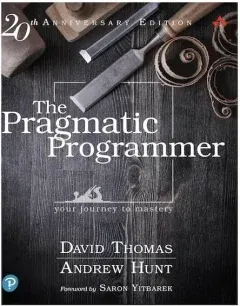 Ammar Najjar · September 23, 2019 · 2 min read
TL;DR Timeless software craftsmanship principles: broken windows, DRY, tracer bullets, and decoupling. A must-read for every developer's career.
- Author: David Thomas, Andrew Hunt
Read more →Book Review: Introduction to Python for Science and Engineering
Ammar Najjar · September 10, 2019 · 1 min readTL;DR A concise, practical introduction to Python for scientists and engineers covering NumPy, SciPy, Matplotlib, and Pandas with hands-on Jupyter examples.
- Author: David J. Pine
Read more →Book Review: Python Descriptors
Ammar Najjar · September 2, 2019 · 1 min readTL;DR Explains Python's descriptor protocol with practical examples. Two parts: understanding built-in descriptors (property, classmethod, staticmethod) and building custom ones.
- Author: Jacob Zimmerman
Read more →Book Review: Python Tricks, The Book
Ammar Najjar · August 31, 2019 · 1 min readTL;DR A practical guide to writing more Pythonic code covering assert patterns, dunder methods, *args/**kwargs, data structures, and loop idioms.
- Author: Dan Bader
Read more →