devops
CI/CD pipelines, container orchestration, infrastructure automation, monitoring, and practices that bridge development and operations.
7 articles
How I Configure Cloudflare for My Website
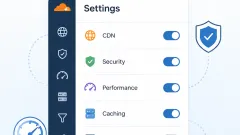
TL;DR A systematic review of every Cloudflare Free plan setting, what stays on, what gets disabled, and the principles behind each decision.
Open your Cloudflare dashboard today and you'll find dozens of features for improving performance, security, and reliability. Some are enabled by default, others are recommended, and new capabilities appear regularly as the platform evolves. With so many options available, I wanted to better understand how each setting contributed to my website.
Read more →How This Website Works: A Technical Look at the Stack

TL;DR A complete technical breakdown of how this site is built, from Bun + Astro content pipeline to Cloudflare deployment, minimal JavaScript, and performance optimizations.
In a companion article, I wrote about why I rebuilt this website with Astro and how that decision grew into a much larger project. That article was about the journey and the thinking. This one is about the outcome: how the website actually works, every layer from writing a post to it appearing in a reader's browser.
Read more →Nine Years on GitHub Pages, Why I Finally Moved to Cloudflare

TL;DR Why I migrated this site from GitHub Pages to Cloudflare after nearly a decade, including the migration process, challenges, and discovered trade-offs.
For nearly nine years, my personal website lived on GitHub Pages. It was free, reliable, and required almost no maintenance, so why migrate? A recent move to Cloudflare Pages prompted this post, which covers the motivation behind the change, the migration process, the issues encountered, and the trade-offs discovered along the way.
Read more →Mastering Git Commands: A Practical Guide
devops Ammar Najjar · July 8, 2025 · 13 min read
TL;DR A practical selection of essential Git commands that help developers track changes more effectively, collaborate smoothly, and manage project history with confidence.
Git is an indispensable tool for version control, enabling developers to track changes, collaborate effectively, and manage project history. While its capabilities are vast, a solid understanding of key commands can significantly streamline your workflow. This article delves into a selection of practical Git commands, explaining what they do, how to use them, and when they are most effective.
Read more →Fetch using Gitlab API
TL;DR Python script that uses the GitLab API with a private token to automatically clone or fetch all your accessible repositories handling configuration via JSON and providing both argparse and config file versions for convenience.
Between gitlab repos that need daily tracking and frequent machine changes, the manual cloning and sync process became exhausting. An automation script was the obvious next step to offload the boring tasks.
Read more →Fedora23 Upgrade (unlabeled home)
devopsAmmar Najjar · July 3, 2016 · 1 min readTL;DR Quick fix for the SELinux labeling issue that occurs after upgrading to Fedora 23 or 24 where the home directory becomes unlabeled preventing user login simply run sudo restorecon -R /home to restore correct permissions.
When I tried to update from the fedora23 to fedora24, I faced the issue that the home directoy lost its labeling:
Read more →Opencv on Openshift
TL;DR This post provides a bash script and step by step instructions to successfully install OpenCV in a Python 2.7 cartridge on OpenShift Online while working around the strict 1GB quota limitation.
When I wanted to intall opencv on my python-2.7 openshift online cartridge I faced the problem of quota limitation to 1GB.
Read more →